Work Isn’t One-Size-Fits-All. Your Workforce Strategy Shouldn’t Be Either
Mar 30, 2026The way we work has fundamentally shifted. Flex schedules, 4-day workweeks, and remote or hybrid environments are no longer perk benefits. They’re expectations. Many organizations are getting stuck in this transition. They apply these changes uniformly and hope for the best. As you can already predict, this results in poor implementation, people get lost in the process and we end up back in office, back on rigid schedules.
People, human beings, don’t experience work the same way. If your strategy doesn’t reflect that, you’ll see inconsistent engagement, performance gaps, and burnout.
This is where DISC work styles can become a powerful lens for designing a workforce strategy that actually works between team members and operationally.
Why Work Styles Matter
Workplace flexibility isn’t just about where people work. It’s about how they function best. DISC helps you understand:
- How people respond to autonomy
- What energizes vs. drains them
- How they communicate and make decisions
- What structure or freedom they need to thrive
When you align modern work models with these styles, you move from reactive policies to intentional design.
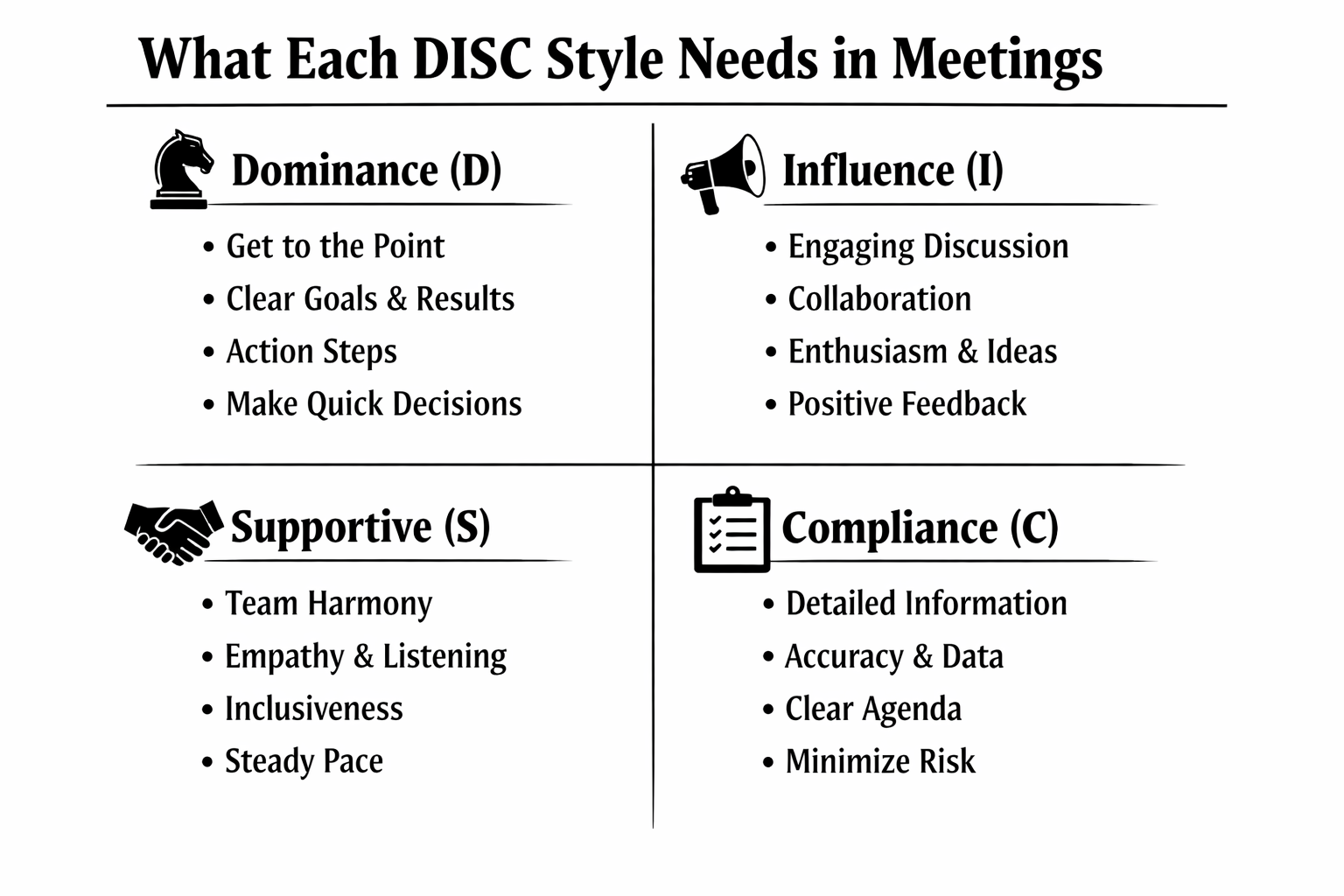 Dominance (D): Autonomy & Results = Engagement
What they need: Control, efficiency, clear outcomes
What drains them: Slow processes, excessive meetings, lack of authority
Workforce Strategy Tips:
- Flexible schedules work extremely well. Let them work when they’re most productive
- Remote work is effective if outcomes are clearly defined
- 4-day workweeks? Ideal, if goals are aggressive and measurable
Watch out for: Too much collaboration-heavy structures. D-styles want to move fast and win, not wait for consensus.
Best Strategy Fit: Outcome-based work environments with minimal oversight
Influence (I): Connection Drives Performance
What they need: Interaction, recognition, energy
What drains them: Isolation, lack of feedback
Workforce Strategy Tips:
- Hybrid models are often best. They need people time
- Build in regular team touchpoints (not just task meetings)
- Flexible schedules should still include collaborative windows
Watch out for: Fully remote environments with limited interaction. They can disengage quickly.
Best Strategy Fit: Flexible and socially connected environments with frequent engagement
Supportive (S): Stability & Trust = Retention
What they need: Predictability, collaboration, meaningful relationships
What drains them: Constant change, unclear expectations, pressure
Workforce Strategy Tips:
- Flexible work is great but needs structure and consistency
- Remote work can work well if communication is steady and supportive
- 4-day workweeks? Yes but transitions need to be well-managed. Remember, stability is key!
Watch out for: Rapid shifts in schedules or expectations without clear communication
Best Strategy Fit: Consistent, people-centered environments with clear routines and roles.
Compliance (C): Clarity & Quality = Excellence
What they need: Structure, accuracy, clear expectations
What drains them: Chaos, vague direction, rushed decisions
Workforce Strategy Tips:
- Remote work is highly effective. They often thrive in focused environments
- Flexible schedules work if expectations and deliverables are crystal clear
- 4-day workweeks can work, but workload and quality standards must be realistic. This work style will work outside of work hours to get their quality standards met.
Watch out for: Unclear flexible work policies. Unclear expectations create stress.
Best Strategy Fit: Structured flexibility with defined processes and expectations
The Big Shift: From Policy to Personalization
Most organizations ask: “what’s the best work model?” A better question is: “what work model works best for who?”
Instead of choosing between remote vs. in-office or 4-day vs. 5-day weeks, consider building flexible frameworks that allow for variation based on work style.
You’re not just managing time, you’re managing energy. When you align your workforce strategy with how people are naturally wired to think, communicate, and work, flexibility stops being a perk…and starts becoming a performance advantage.
Explore DISC or grab up a Free Leaders Guide: Navigating Workforce Patterns