The Language at Work Is Costing More Energy Than the Work Itself
Feb 16, 2026Most workplace stress isn’t caused by workload alone. It’s caused by how work is discussed, especially under pressure and stress..
The phrases repeated in meetings. The tone used in feedback. The assumptions hiding inside everyday email and chat communication. Many teams try to fix burnout with new tools or processes, they overlook one of the biggest energy drivers at work...each persons communication style.
This is where language reframe and DISC come together. Explore DISC: Click Here
Communication As Part of Energy Management
Every interaction at work either builds clarity or drains capacity. Language signals how decisions are made, who holds power, whether your voice is welcome and if effort (engagement) feels worth it.
Under stress, communication narrows. People revert to their default DISC style. Often without realizing how it lands on others. The result isn’t conflict, it’s misalignment of your energy.
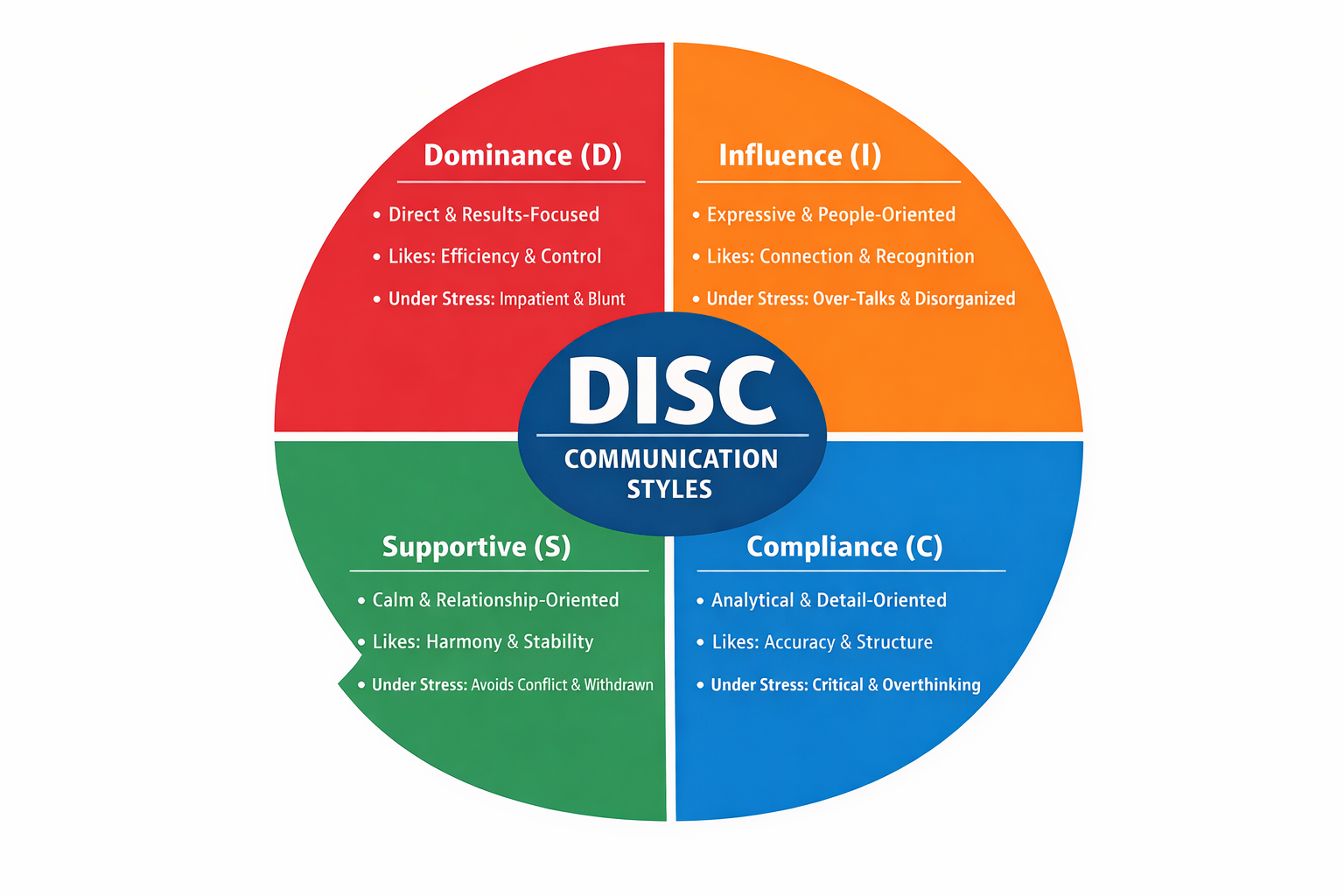
DISC Reveals Why the Same Words Land Differently
DISC helps explain why one phrase can motivate one person and completely shut down another.
-
A Dominance style may value speed and results, unintentionally sounding dismissive.
-
An Influence style may talk through ideas, unintentionally overwhelming others.
-
A Supportive style may soften language to preserve harmony, unintentionally withholding clarity.
-
A Compliance style may focus on precision and risk, unintentionally slowing momentum.
None of these are wrong. When stress is high and language isn’t flexible, energy drains.
Limiting Language Is Often Style-Driven
Phrases like “That’s the way we’ve always done it" or “I’ll just do it myself” or “We don’t have time" or “We tried that already” often aren’t resistance to change. They’re communication hard wired under pressure.
They reflect a need. A need for control. A need for certainty. A need for stability. A need for efficiency.
Language Reframe Is the Missing Skill
Language reframe isn’t about positivity or saying things “nicer.” It’s about shifting conversations from limitation to possibility. While honoring different communication styles.
-
Final statements toward open design questions
-
Individual burden moves to shared ownership
-
Style clashes flexes to style translation
Teams that reframe language don’t eliminate stress. They shorten its impact.
Why This Matters for Energy Management
When communication styles collide without flexibility. Meetings feel heavier than they need to be. Feedback feels personal instead of useful. People conserve energy by disengaging (statistically, 70% of the U.S. workforce is disengaged at work. Yikes!)
But when teams understand DISC and learn how to reframe language, communication feels safer, capacity can be discussed honestly, collaboration becomes more efficient and innovation re-enters the room. The work doesn’t necessarily change. The experience of the work does.
Workplace culture isn’t built through personality labels or communication workshops alone. It’s built in everyday moments. How problems are framed. How limits are expressed. How different styles are respected.
When teams learn to recognize communication styles and shift their language, they stop working against each other’s energy.
Same people. Same roles. Different conversations. And a completely different outcome. Explore DISC: Click Here or grab up a Free Leaders Guide: Navigating Workforce Patterns
