Redesign the Energy Drain: Stress-Less Meetings
May 26, 2026In almost every Workforce Energy Management program I lead, one topic consistently hits the top of the "energy drainer" list...dysfunctional meetings.
You’re sitting in pressure, squeezed between the company demands and your team’s need for direction, while your calendar is a solid block of back-to-back calendar invites. It feels like a survival-mode marathon where you’re managing tasks but losing your mind in the process.
Part of the problem is that we are stuck in traditional ways of working. Following routines simply because we always have. We fall victim to Parkinson’s Law, where a meeting expands to fill every minute of the hour we scheduled, regardless of whether the objective was met in the first twenty.
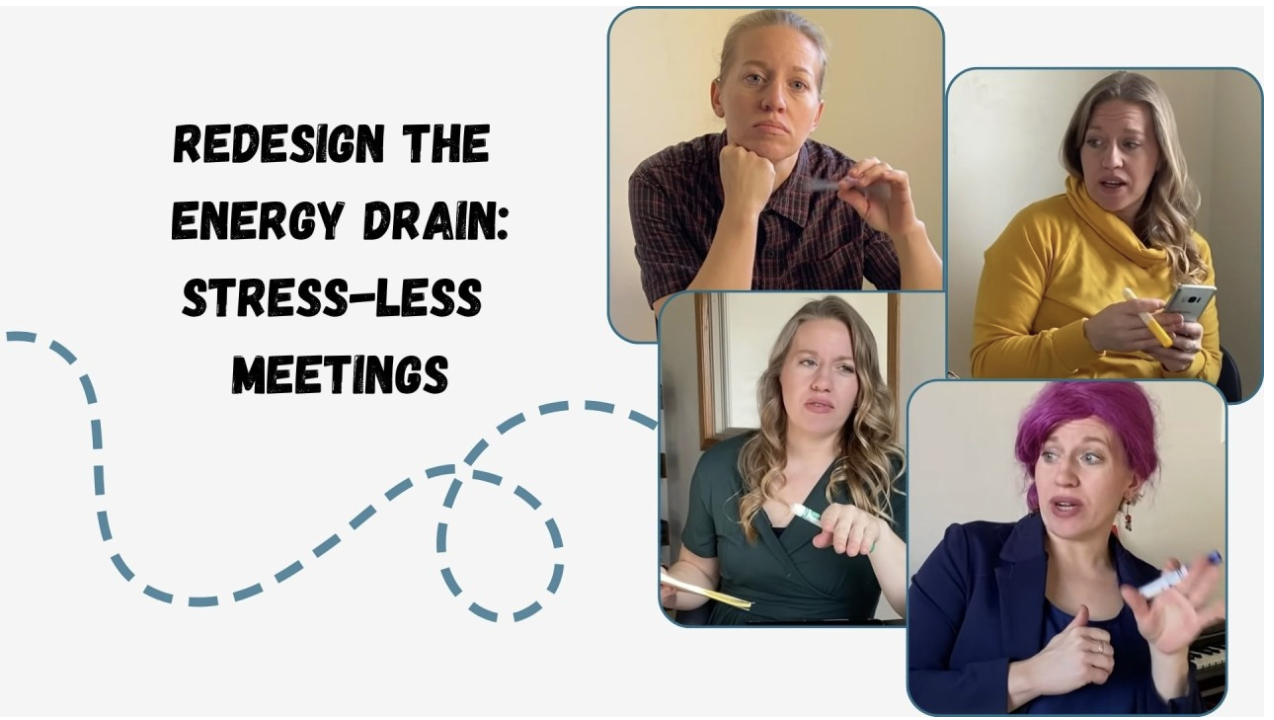
But the deeper under the surface issue is often miscommunication between different behavioral styles. As a behavioral analyst in DISC, I see how often we try to force a "one-size-fits-all" meeting strategy on a team with diverse needs.
Workforce Energy Management isn't about adding more to your plate. It’s about showing up differently in the work you’re already doing. Here is how you can use DISC to redesign your meetings so they stop draining your team and start fueling your results.
Dominance (Results-Driven)
What they’re looking for: Efficiency, high-level overviews, and immediate progress. They want to know the "What" so they can get back to producing results.
- The Energy Drain: Meetings that drift off-track, lack a clear objective, or stay in the weeds too long.
- The Quick Energy Tip: Set a SMART Goal for the meeting. State the objective in the first two minutes: "By the end of this 20 minutes, we will have decided on X." If you hit the goal early, end the meeting immediately. Reclaiming those 10 minutes is a massive win for a D-style’s energy.
Influence (Interactive & Connection)
What they’re looking for: group discussion, brainstorming, and social bonding. They want to know the "Who" and feel connected to the team.
- The Energy Drain: Dry, data-heavy presentations where they are expected to sit silently for an hour without any genuine conversation. Death by powerpoint!
- The Quick Energy Tip: The 2-Minute Micro-Moment. Start the meeting with a quick "human" check-in or a celebration of a recent win. This releases oxytocin, which deepens trust and makes the actual work feel less like a chore and more like a collaboration.
Supportive (Collaborative & Stability)
What they’re looking for: Predictability, consensus, and a sense of safety. They want to know the "How" and ensure the team is aligned.
- The Energy Drain: Last-minute "emergency" meetings or being put on the spot to make a decision without time to process the weight of the change.
- The Quick Energy Tip: Provide a "No-Surprise" Agenda. Send out the talking points at least a day in advance. This reduces decision fatigue and allows them to show up ready to contribute, rather than anxious and defensive.
Compliance (Data & Details)
What they’re looking for: Accuracy, logic, and data. They want to know the "Why" and need the facts to feel confident in the direction.
- The Energy Drain: Meetings that feel like cognitive whiplash. Shifting gears too fast without providing the proof or the background context.
- The Quick Energy Tip: Pre-Meeting Fact Share. If you have reports or data, share them before the meeting through a dashboard, project space or in the calendar invite. This allows the C-style to audit the information on their own time, so the meeting can focus on high-level strategy rather than a line-by-line review that drains everyone else’s battery.
You don’t have to overhaul your entire culture overnight. Real growth happens in the small moments where you choose to do one thing differently.
Take a step on this path: pick one meeting on your calendar this week. Look at the key players in that room. Are you meeting their DISC energy needs, or are you just filling the hour?
When you change the lens you’re leading through, the environment downstream changes with it. Let’s stop battling the reality of our calendars and start changing our response to them. Explore more about DISC: https://www.kbtrainingconnections.com/disc
Grab up a Free Leaders Guide: Navigating Workforce Patterns
