You Don't Have A Performance Problem. It's Energy.
Apr 13, 2026Most middle managers aren’t struggling with leadership. They’re managing exhausted teams while being asked to produce more. More clients. More responsiveness. Keep up with ALL the changes. While also delivering...more results. Somewhere along the way, the strategy becomes: push harder, check-off more, follow up faster. Here’s what you may be seeing instead:
-
Productivity quietly drops.
-
Engagement becomes inconsistent. It's a day-to-day vibe change.
-
Small mistakes increase, now affecting your members and customers.
-
Your “reliable” people start pulling back.
It’s frustrating because on paper, everything should be working...but it’s not. You feel it. That lingering energy drain. Something about how were doing things these days, isn't working anymore.
Most leaders try to solve this with time management tools, accountability systems or more structure and oversight. Those aren’t wrong but they’re incomplete. What looks like a performance issue is often an energy issue in disguise. That lurking underlayer of why people are sitting in their cars not wanting to go into work.
When energy is off focus, decision-making slows, communication breaks down, people either overextend or disengage. You can’t sustainably increase output from a depleted system. That’s where most leadership strategies miss the mark.
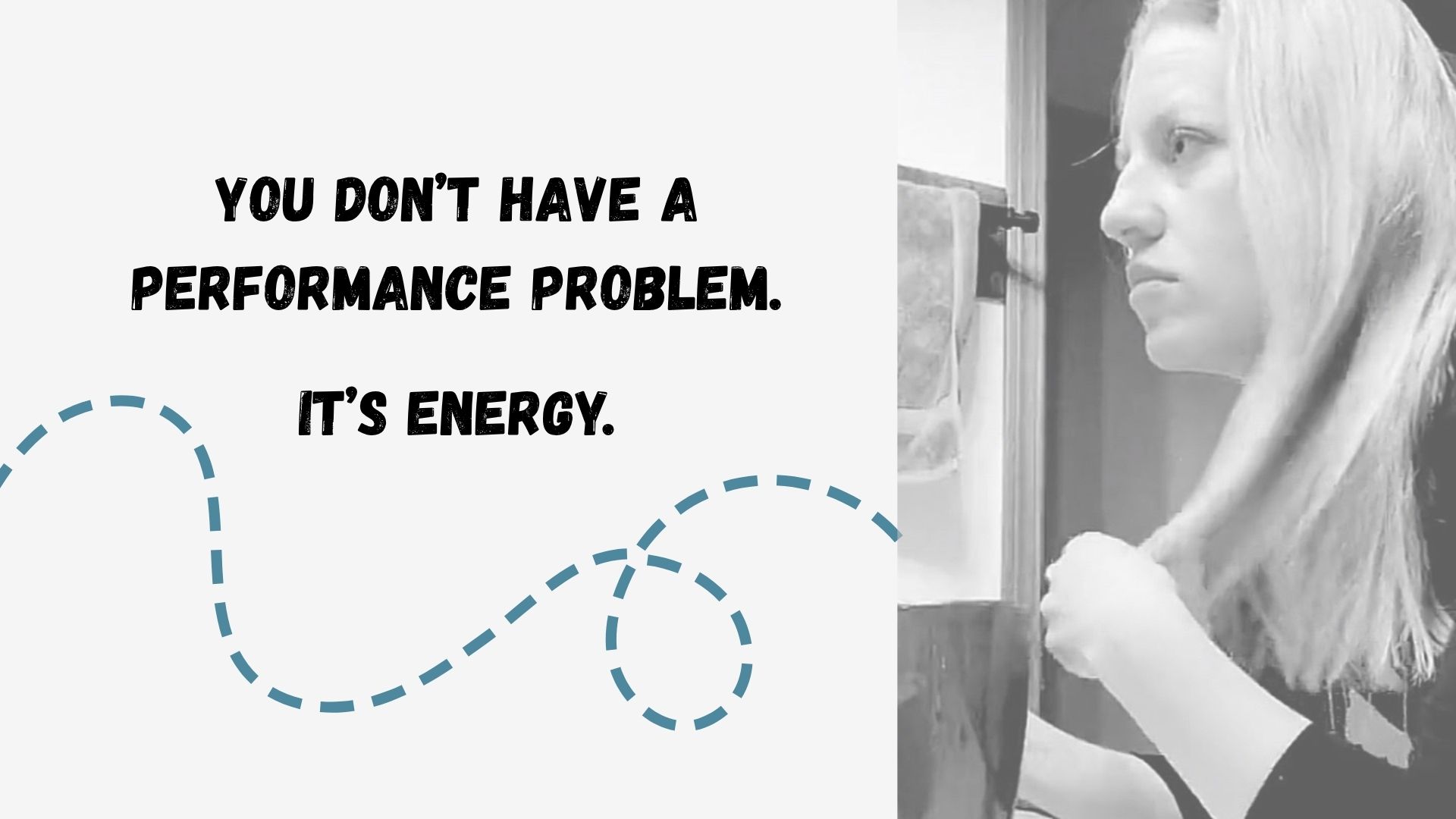
The picture above is me losing myself in this leadership pressure. Energy drained. Doing anything and everything to lead a team, meet the demands from above. No matter what I tried, the more I pushed through...it wasn't working. I started to not even recognize myself in the mirror anymore.
A Clearer Pathway to Look at It: Energy Patterns
Instead of asking “How do I get more out of my team?” Start asking “What energy patterns are driving how my team shows up?” Here’s a simple framework to begin:
1. Overextended Energy (The “Always On” Pattern)
What it looks like:
-
High performers taking on too much
-
Saying yes to everything
-
Eventually slowing down or burning out
What leaders often do is reward it, rely on it, expect it to continue.
What actually helps:
-
Reset expectations around capacity
-
Normalize prioritization over constant availability
-
Reinforce that sustainability = performance
2. Protective Energy (The “Pulling Back” Pattern)
What it looks like:
-
Minimal engagement
-
Avoidance of extra responsibility
-
Quiet resistance to change
What leaders often assume is lack of motivation or poor attitude. What’s actually happening in these patterns is energy conservation. They're past overload, stretched capacity or lack of clarity
What actually helps:
-
Clarify priorities
-
Reduce unnecessary noise
-
Rebuild trust through consistency
3. Reactive Energy (The “Firefighting” Pattern)
What it looks like:
-
Constant urgency
-
Interruptions driving the day
-
No space for proactive work
What leaders often do is jump into the chaos, which reinforces urgency as the norm.
What actually helps:
-
Create structure around response vs. reaction
-
Define what is actually urgent
-
Protect focused work time
4. Aligned Energy (The Performance Sweet Spot)
What it looks like:
-
Clear priorities
-
Steady output
-
Healthy pace of work
-
Ownership without overwhelm
This is where performance and sustainability meet. Trust me as a burnout survivor on this one, it doesn’t come from pushing harder. It comes from leading energy intentionally. This is where I started to see energy enter my days again. And therefore...my team gaining energy. The ripple effect.
If your team feels stuck, stretched, or inconsistent, it’s not because they don’t care. It’s not because they need more pressure or micromanagement. It’s because the patterns driving how they work haven’t been addressed. Just like how you feel, they feel it too.
When you shift from managing tasks to managing energy and pushing output to stabilizing patterns...you’ll start to see the natural energy change. More consistent performance. Better decision-making. Less friction across the team. Results improve without adding more pressure. I started managing my energy, the team energy and productivity natural followed.
Where to Start?
Most leaders aren’t taught how to manage team energy. They’re taught how to manage work. That’s the gap. It’s exactly what we address inside programs. Guiding organizations to build teams that don’t just perform in the moment, but sustain it over time by shifting the patterns driving behavior.
If you’re navigating:
-
Performance pressure without increasing burnout
-
Teams that feel stretched or inconsistent
-
The need to create more sustainable results
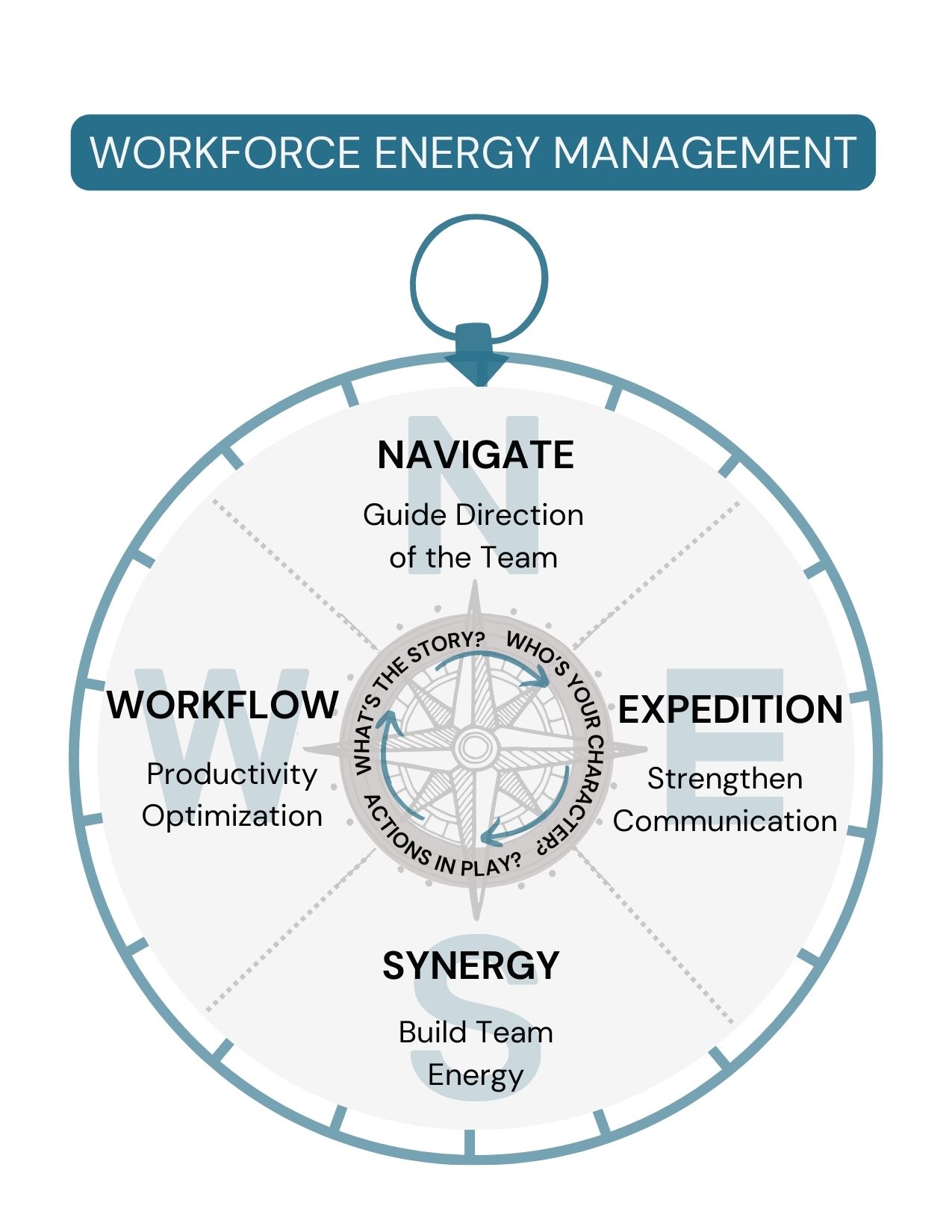
The question isn’t “What else do we add?” It’s “What needs to shift?” Explore that thought more through the Leadership Compass or grab up a Free Leaders Guide: Navigating Workforce Patterns